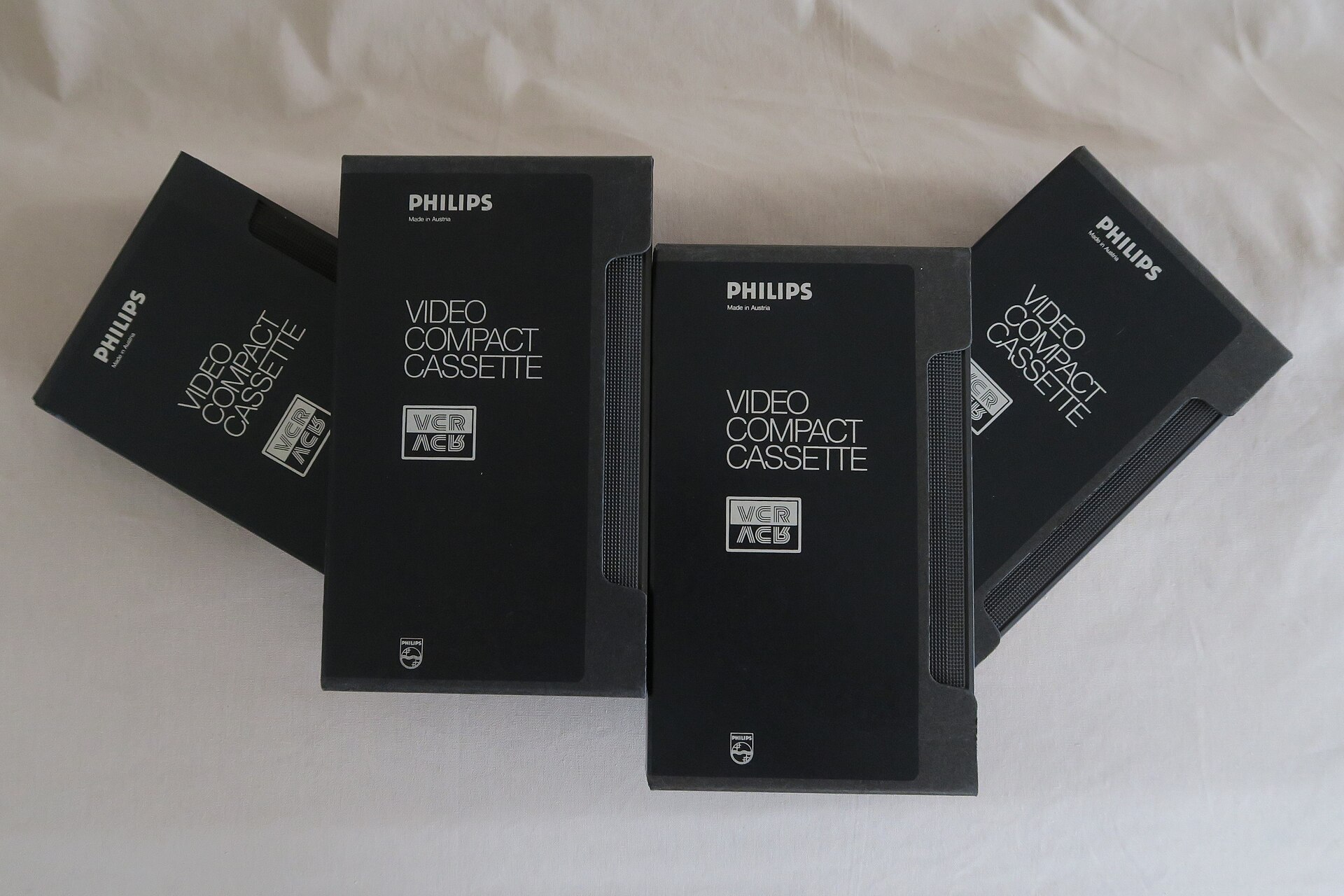
Video 2000 was the third contender in the home video war and the only one built by Europeans. Philips and Grundig showed it at the Internationale Funkausstellung in Berlin in 1979, more than two years after VHS and four after Betamax. It was sold in Europe, South Africa and Argentina, and never in North America or Japan, where the films and the volume were.
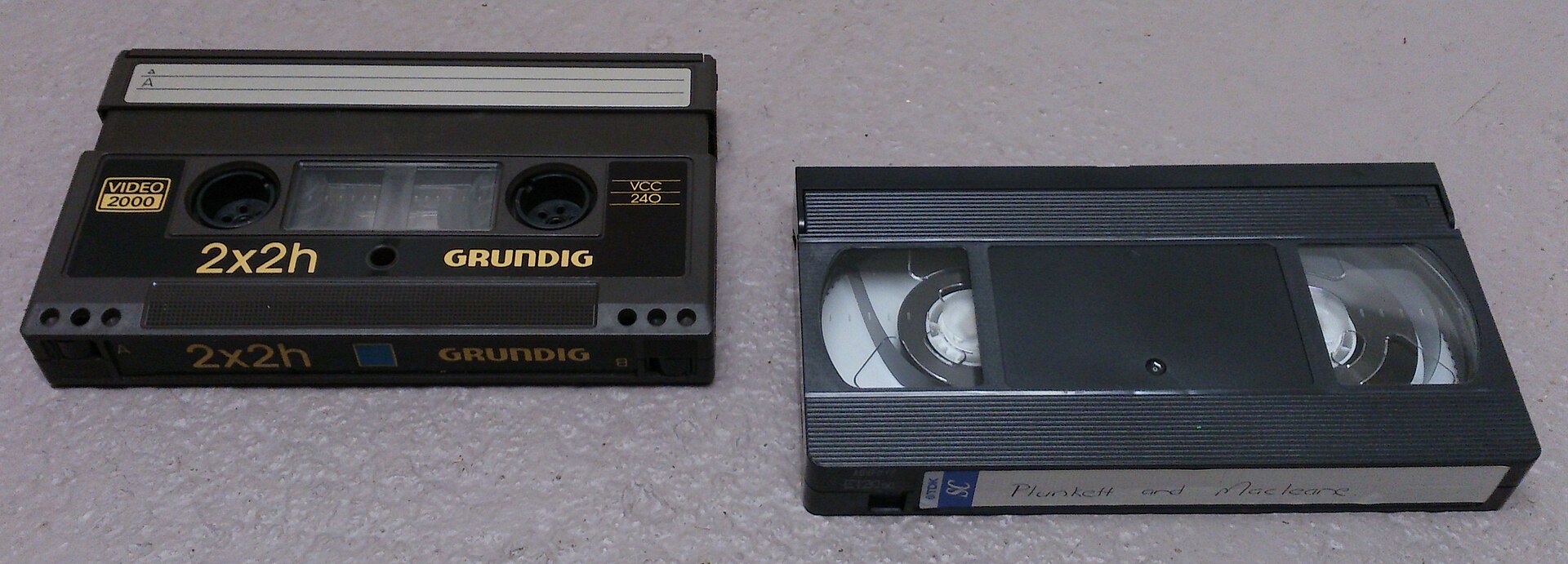
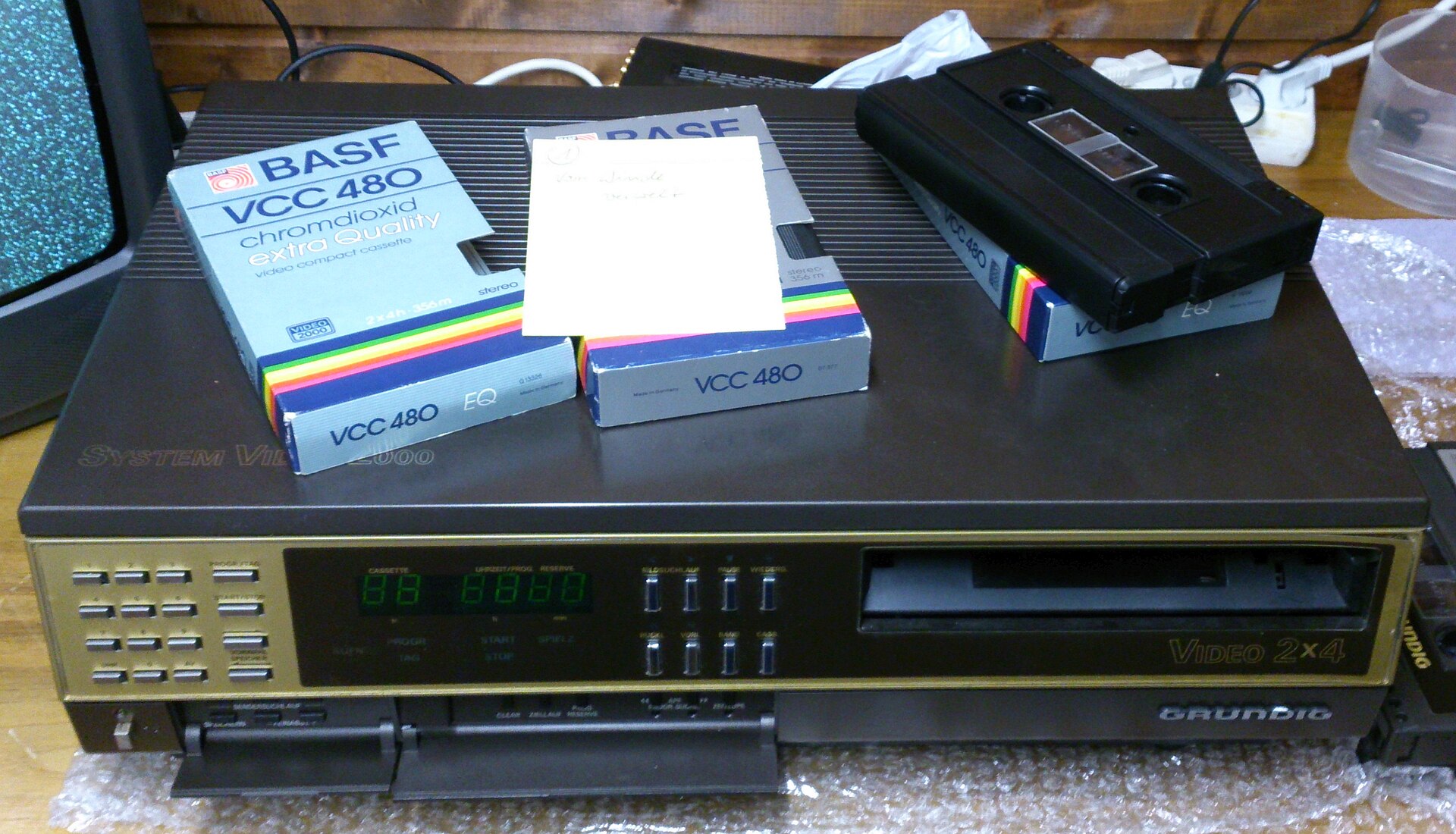
The engineering was good. The cassette flipped over, so one tape held two sides of programme. Dynamic Track Following moved the heads on piezoelectric actuators and dropped the control track and the tracking knob. The launch was less tidy: early Philips and Grundig machines were not fully compatible, with the Philips VR2020’s audio head 2.5 mm out of position against Grundig’s Video 2x4.
It held a 16% share in 1980, by German Wikipedia’s figures, and 4% by 1986, when VHS had 93%. Grundig sold its first VHS recorder around mid-1984, and by autumn of that year Philips and Grundig both offered VHS machines alongside their own system. English Wikipedia and the Obsolete Media timeline date the end of distribution to 1988; German Wikipedia puts the end of consumer-recorder manufacturing at 1986. Nobody makes the recorders or the tapes now. What remains is a small trade in repair and tape transfer for family recordings on cassettes no maker has produced in decades.
The two companies that designed it ended up selling their rival’s format. Having the better mechanism was not what decided it.
Worth remembering
- The cassette was two-sided: you flipped it like a record. Philips and Grundig advertised with the line 'VHS and Betamax only wind one way - Video 2000 does both.'
- Dynamic Track Following steered the video heads on piezoelectric elements, so the recorder tracked the tape automatically and needed no separate control track or tracking knob.
- At launch, the audio head on early Philips VR2020 recorders sat 2.5 mm out of position relative to Grundig's Video 2x4, so tapes recorded on one maker's machine could play out of sync on the other's.
Gallery
Sources
- Video 2000 (VCC) was developed by Philips and Grundig to compete with VHS and Betamax; distributed from 1979, exclusively in Europe, South Africa and Argentina, until 1988 Wikipedia
- Flip-over cassette slightly larger than VHS, half-inch chromium dioxide tape using half the tape width per side; Dynamic Track Following removed the need for a control track and manual tracking Wikipedia
- Early Philips VR2020 machines had an audio head 2.5 mm out of position relative to Grundig's Video 2x4, causing synchronisation problems between machines Wikipedia
- Video 2000 / Video Compact Cassette, 1979-1988: Philips and Grundig end distribution after losing out to VHS Obsolete Media
- Shown at IFA Berlin 1979; piezoelectric actuators for head tracking; Grundig and Philips began offering VHS from autumn 1984; consumer-recorder manufacturing ceased 1986, professional divisions to 1988 Wikipedia (German)
- 1980 Video 2000 market share 16%; by 1986 VHS held 93% and Video 2000 4%; Grundig's own VHS recorder from mid-1984 Wikipedia (German)
- Never sold in North America or Japan; UK sellers included Philips, Grundig, Pye and Telefunken; slogan 'VHS and Betamax only wind one way - Video 2000 does both' EachMoment
Leave a flower to show you came, and remembered.