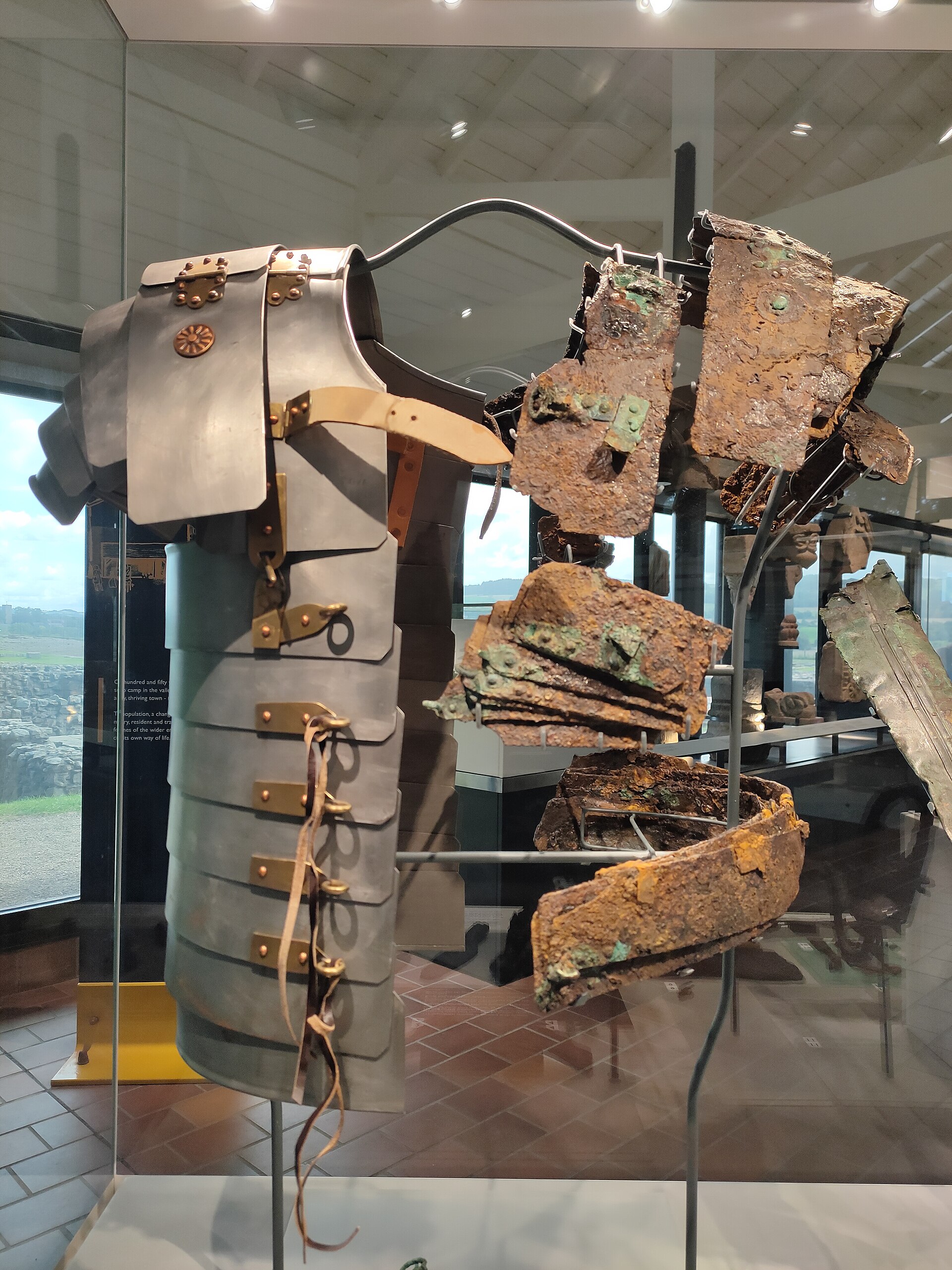
Lorica segmentata is a modern name. Scholars coined it in the 16th century, and the Roman word for the armour is not known; “lorica lamminata” has been suggested, with no firm evidence. It was a cuirass of overlapping iron plates riveted to leather straps, with brass fittings, and it could be separated into four sections. Wikipedia dates the earliest evidence to around 9 BC at Dangstetten. A cuirass of about thirty plates, found at Kalkriese in 2018, is dated to the Augustan period and is over a century older than the Corbridge examples that had been the best preserved before it.
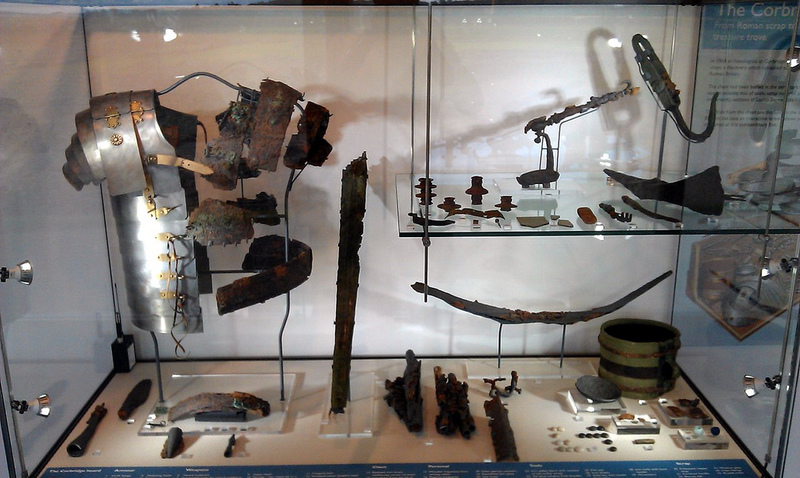
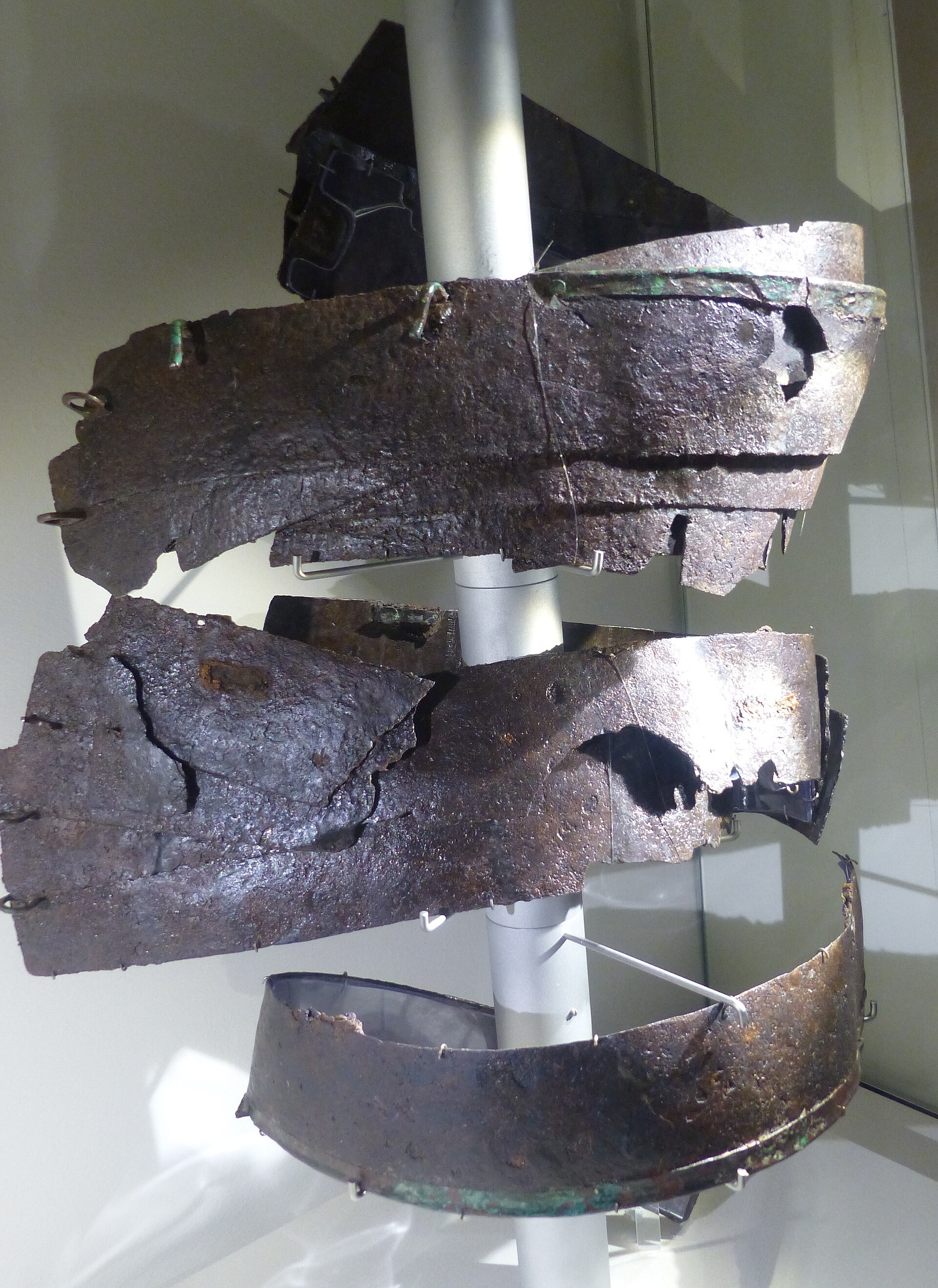
Archaeology supplies most of what is known. The Corbridge Hoard, excavated in 1964 in Northumberland, held six upper and six lower half-units that could be as few as three whole cuirasses. English Heritage dates the contents to AD 122 to 138 and says the chest was probably stored until an owner who never returned could collect it. Studying it showed how the armour on Trajan’s Column worked. Finds come from 16 western countries and, per Wikipedia, none from the east; Menéndez Argüín, writing in Gladius in 2006, counts one exception. He gives the weight as 6 to 9 kg and says it was cheaper to make than mail, but needed specialist workshops and constant repair of its copper-alloy fittings.
The end is a range. Wikipedia says it fell out of favour around the middle of the 3rd century and puts a depiction on the Arch of Constantine in 315, while noting that the reliefs may be reused from a Marcus Aurelius monument. Its equipment article gives the last recorded use as the last quarter of the 3rd century, at León in Spain. Menéndez Argüín says 3rd-century finds in Britain and on the German frontier show use to at least the 260s, and that a workshop of Legio VII Gemina at León was still active at the end of the century. The army went back to mail. The plates survive as excavated fragments, and museums and re-enactors display reconstructions made from them.
Worth remembering
- A cuirass found at Kalkriese in 2018 has about thirty iron plates, with hinges, buckles, bronze fittings and leather belt fragments still attached.
- The Corbridge Hoard, buried between AD 122 and 138 in an iron-bound alder-wood chest, held six upper and six lower half-units of the armour, mismatched. English Heritage's curators think the owner meant to come back for it and did not.
- A cuirass weighed 6 to 9 kg, and its copper-alloy hooks and buckles were weak enough to need repeated repair in specialist workshops.
Gallery
Further reading
Sources
- Name coined by scholars in the 16th century; the Romans did not use it, and 'lorica lamminata' is a suggested ancient name without firm evidence Wikipedia
- Earliest evidence of the armour around 9 BC (Dangstetten); Kalkriese type c. 20 BC to 50; Newstead type c. 120 to possibly the early 4th century; last recorded use the last quarter of the 3rd century AD (León, Spain) Wikipedia
- Fell out of favour around the middle of the 3rd century but stayed in use in the Late Empire; depicted on the Arch of Constantine (315), though those reliefs may be reused from a Marcus Aurelius monument; plates riveted to leather straps, fittings in brass, separable into four sections; finds in 16 western countries and never in the east Wikipedia
- Continued in service until at least the latter part of the 3rd century AD; types named after Kalkriese, Corbridge, Newstead and Alba Iulia Lorica Segmentata (M.C. Bishop's site)
- Traditionally thought to vanish in the second half of the 2nd century; 3rd-century finds in Britain and the German limes show use at least to the 260s; a Legio VII Gemina workshop was active at the end of the 3rd century; weight 6-9 kg; cheaper to make and lighter than mail but needed specialist workshop maintenance and had weak copper-alloy fittings; almost no finds in the eastern provinces Gladius XXVI (2006), A. R. Menéndez Argüín
- Corbridge Hoard excavated in 1964 at Corbridge, Northumberland; six upper and six lower half-units that could represent as few as three whole cuirasses or twelve partial sets; probably dates to AD 122-138; iron-bound alder-wood chest Wikipedia
- Corbridge hoard contents date from AD 122-138; curators think it was stored until its owner could retrieve it, and the owner never came back English Heritage
- Studying the Corbridge hoard showed how the armour shown on Trajan's Column functioned English Heritage
- Near-complete cuirass found at Kalkriese in 2018, about thirty iron plates plus hinges, buckles, bronze fittings and leather belt fragments; Augustan-period; over a century older than the Corbridge examples Imperium Romanum
Leave a flower to show you came, and remembered.