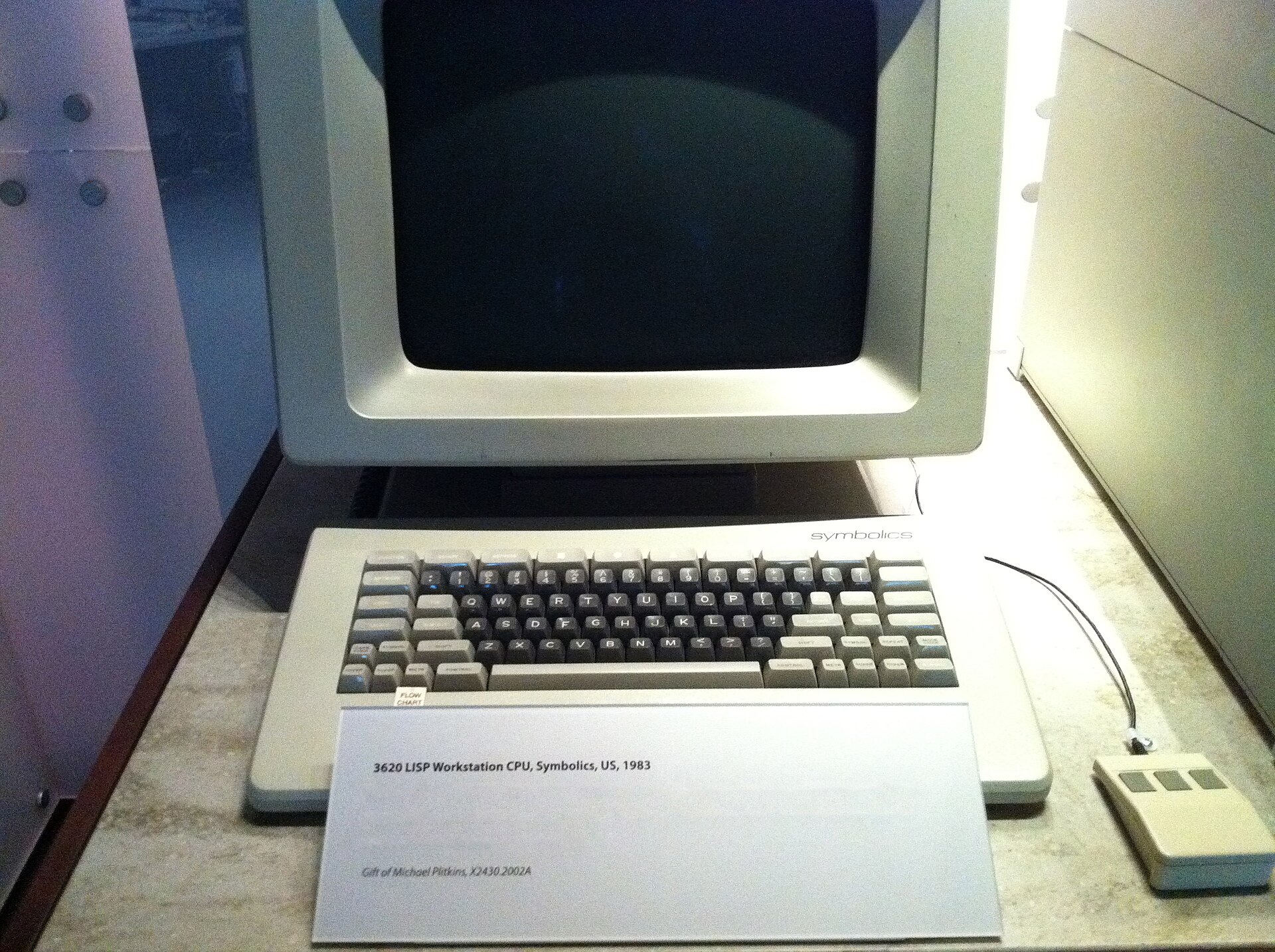
A Lisp machine was a single-user computer whose processor, memory tags and microcode were designed around Lisp, the language most American artificial-intelligence work of the 1970s and 1980s was written in. MIT’s AI Lab began the project in 1973, and about 25 near-prototype CADRs were sold for roughly $50,000 each. Around 1979 and 1980 the lab split over commercialization: Richard Greenblatt founded Lisp Machines, Inc., and a rival group founded Symbolics, which shipped its first product in 1981. Texas Instruments sold its Explorer and Xerox its Interlisp-D workstations alongside them. Perhaps 7,000 machines had been sold by 1988.
The market peaked in 1986. Symbolics’s product revenue went from $101.6 million in fiscal 1986 to $82.1 million in 1987 and $55.6 million in 1988, a 45% fall in two years. A Symbolics 3600 cost about $80,000, and by the late 1980s general-purpose Sun and DEC workstations ran Common Lisp at better price-performance, while the AI funding that had bought the specialised machines dried up. LMI went bankrupt in 1987. Symbolics shipped its last hardware, the XL1201 and NXP1000, in 1992 and filed for Chapter 11 in 1993.
No one builds Lisp machines now. Symbolics’s Genera operating system outlived the hardware as Open Genera, which emulates the Ivory chip in software on Alpha workstations, and hobbyists have written emulators for the CADR and the TI Explorer. Lisp still runs, on ordinary processors.
Worth remembering
- The first machines sold were near-copies of MIT's: about 25 CADRs went for roughly $50,000 each.
- A Symbolics 3600 cost about $80,000.
- Symbolics's Cambridge office registered symbolics.com on 15 March 1985, the first .com domain name ever registered.
The people
-
Richard Greenblatt — MIT AI Lab programmer; founded Lisp Machines, Inc.
Founded LMI in 1979 after the AI Lab split over commercialization. LMI went bankrupt in 1987.
Gallery
Further reading
Sources
- MIT's Lisp Machine project began in 1973; about 25 near-prototype CADRs were sold for roughly $50,000 each; Symbolics, LMI, Texas Instruments and Xerox sold Lisp machines in the 1980s; perhaps 7,000 units total as of 1988; cheaper desktop machines could soon run Lisp faster than Lisp machines Wikipedia
- Symbolics was founded 9 April 1980 in Cambridge, Massachusetts; the Ivory-generation machines (MacIvory III 1991, XL1201 and NXP1000 1992) were its last hardware; Open Genera runs the Ivory instruction set in software on Alpha workstations Wikipedia
- Symbolics consolidated product revenues for fiscal 1986, 1987 and 1988 were $101.6 million, $82.1 million and $55.6 million; the company filed for bankruptcy after management conflict and the rise of cheap Sun and DEC workstations MIT OpenCourseWare (6.933J student case study)
- Symbolics filed for bankruptcy in January 1993; the Lisp machine market peaked in 1986 and began collapsing in 1987; a Symbolics 3600 cost about $80,000 Positronia
- Lisp Machines, Inc. was founded in 1979 by Richard Greenblatt and went bankrupt in 1987; its assets passed to GigaMos Systems, which lost them in a 1989 seizure Wikipedia
- By the late 1980s general-purpose machines such as the Sun 3/260 in its AI configuration outperformed Lisp machines on price-performance; Symbolics went bankrupt in early 1993 Tim Bradshaw (tfeb.org)
Leave a flower to show you came, and remembered.