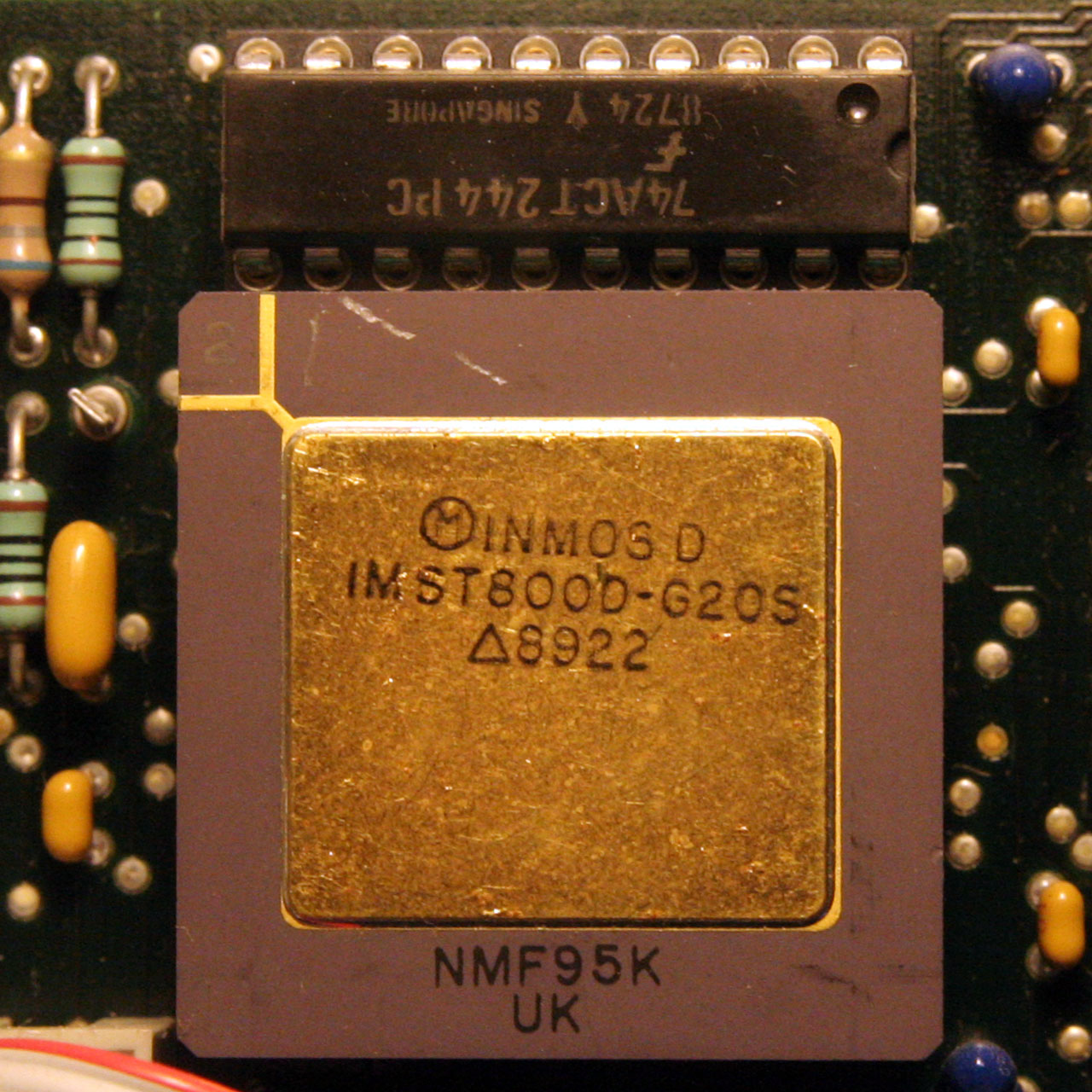
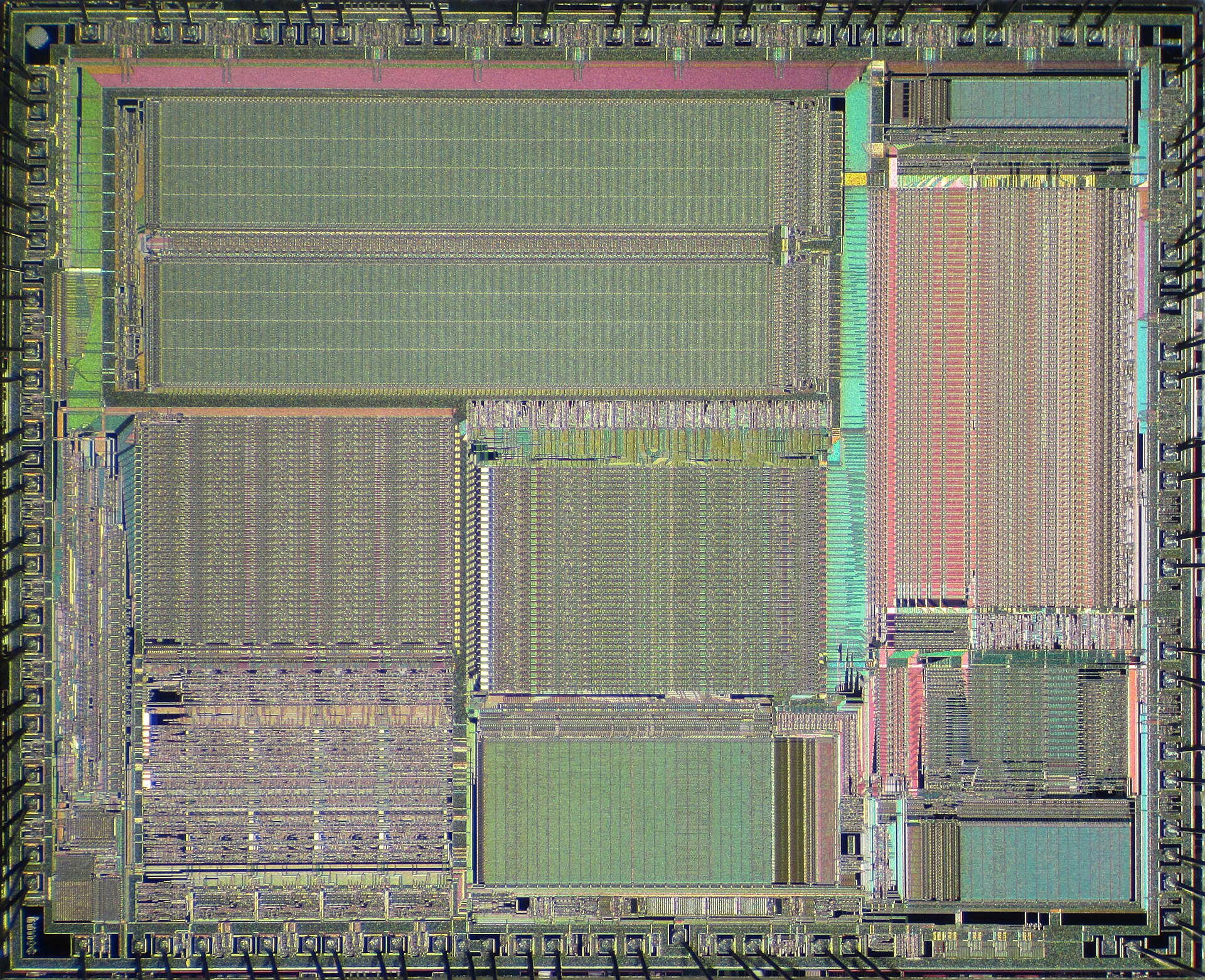
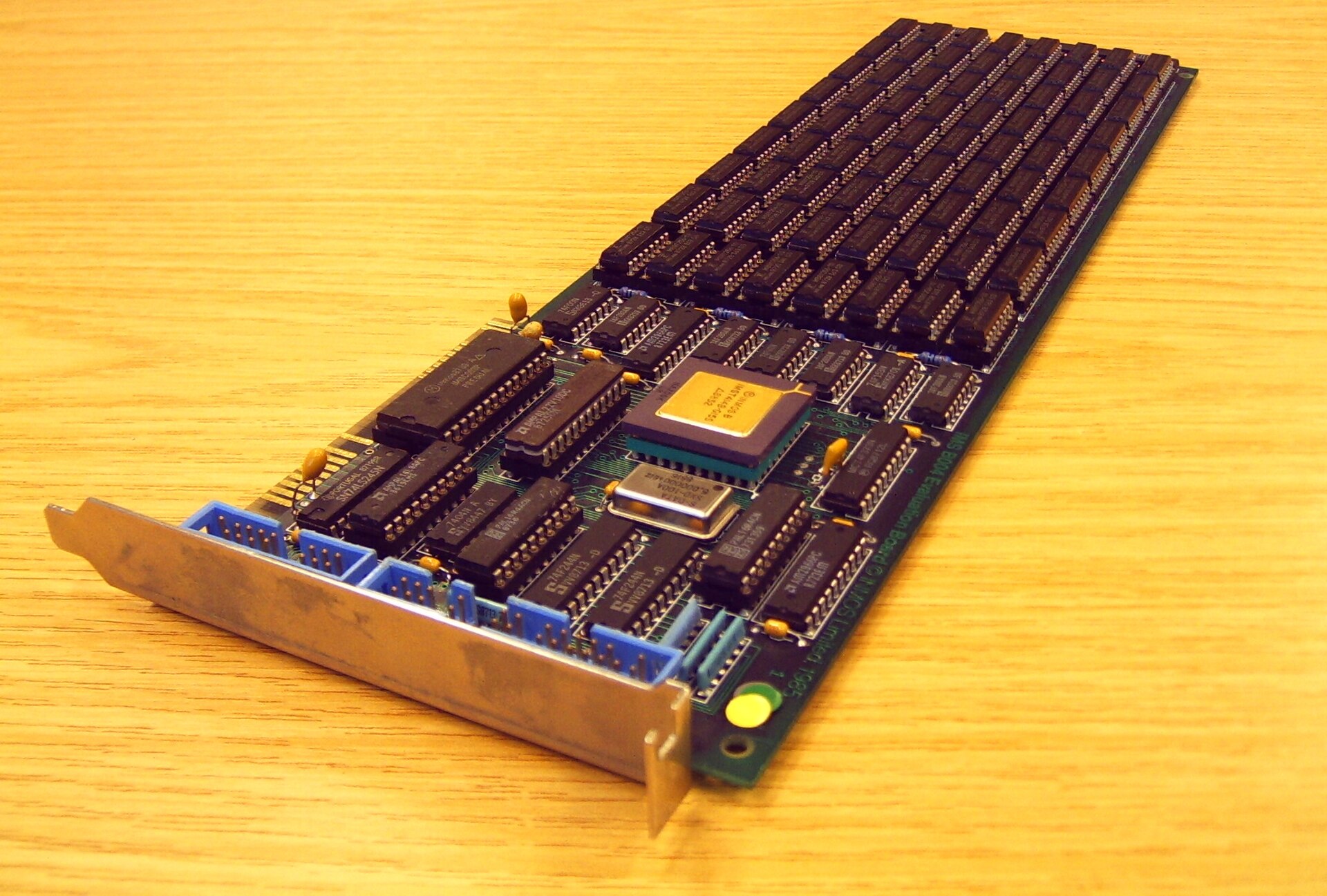
The Inmos Transputer was a microprocessor designed to be one of many. Each chip carried its own memory interface and four serial links to talk to neighbouring chips, so a parallel computer could be assembled by wiring transputers together instead of building a custom bus. David May led the design at Inmos, the Bristol company founded in 1978 by Iann Barron, Richard Petritz and Paul Schroeder with 50 million pounds of UK government money. It was programmed in occam, a language built on Tony Hoare’s communicating sequential processes, in which running things in parallel was a construct of the language. The first chips appeared in 1984, the T800 added floating point, and transputers ran Meiko’s Computing Surface and a generation of university parallel-computing courses.
Thorn EMI bought the government’s stake in 1984, and SGS-Thomson bought Inmos in 1989. The successor, the T9000, ran into technical problems and delays and missed its performance targets. Parsytec moved its supercomputers to PowerPC, the T9000 was abandoned, and in 1994 Inmos was absorbed into STMicroelectronics and the name dropped. On 31 March 1998 SGS-Thomson issued an end-of-life notice for the whole family, with last buys by the end of 1998 and final deliveries by the end of 1999.
Parts of it carried on elsewhere. A redesigned 32-bit core, the ST20, went into set-top boxes and GPS chipsets, and RS DesignSpark traces the SpaceWire network used on the James Webb Space Telescope to T9000 link technology. David May co-founded XMOS in 2005, whose multicore chips use the transputer’s channels and threads, but that is a different company with different silicon. The transputer itself was never made again.
Worth remembering
- Each transputer had its own serial links to talk to neighbouring chips, so machines such as the Meiko Computing Surface were built by wiring many T800s together.
- occam made parallelism a language feature: its PAR construct ran processes concurrently, and a message was sent only when sender and receiver were both ready.
- When T9000 chips ran short in the early 1990s, supercomputer maker Parsytec switched its GC machine to PowerPC.
The people
-
David May — Lead architect of the transputer and co-designer of occam
Led the transputer's design at Inmos, then co-founded XMOS in 2005, whose multicore chips reuse its channel-and-thread model.
-
Iann Barron — Co-founder of Inmos
Founded Inmos in 1978 with Richard Petritz and Paul Schroeder, backed by 50 million pounds from the UK National Enterprise Board.
-
Tony Hoare — Advisor; creator of communicating sequential processes
His CSP formalism underlies occam and the transputer's message-passing design.
Gallery
Further reading
Sources
- The transputer was a microprocessor designed by David May and Robert Milne at Inmos, intended to be programmed in occam, based on communicating sequential processes; the T9000 failed to meet performance goals; the ST20 later appeared in set-top boxes and GPS chipsets Wikipedia
- Inmos was founded in July 1978 in Bristol by Iann Barron, Richard Petritz and Paul Schroeder, with initial UK National Enterprise Board funding of 50 million pounds; Thorn EMI bought the government's 76% stake in 1984; SGS-Thomson bought Inmos in April 1989; the T9000 'encountered various technical problems and delays, and was eventually abandoned'; Inmos was fully absorbed into STMicroelectronics in 1994 and the brand discontinued Wikipedia
- SGS-Thomson issued an end-of-life notice for all transputer products on 31 March 1998: last buys by 31 December 1998 and deliveries completed by 31 December 1999 (as relayed on the comp.sys.transputer newsgroup) comp.sys.transputer archive (WoTUG)
- David May was lead architect of the transputer and co-designer of occam; Tony Hoare, creator of CSP, advised Inmos; the Meiko Computing Surface and the ESPRIT Supernode project used T800 transputers; SpaceWire (used on the James Webb Space Telescope) derives from T9000 serial-link technology RS DesignSpark
- XMOS was established in July 2005 in Bristol by Ali Dixon, James Foster, Noel Hurley, David May and Hitesh Mehta; its channels and threads are part of the transputer legacy, and its XC language incorporates principles from occam and CSP Wikipedia
Leave a flower to show you came, and remembered.