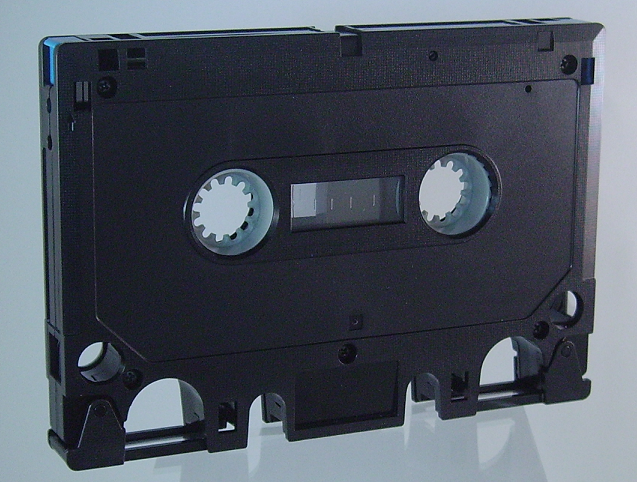
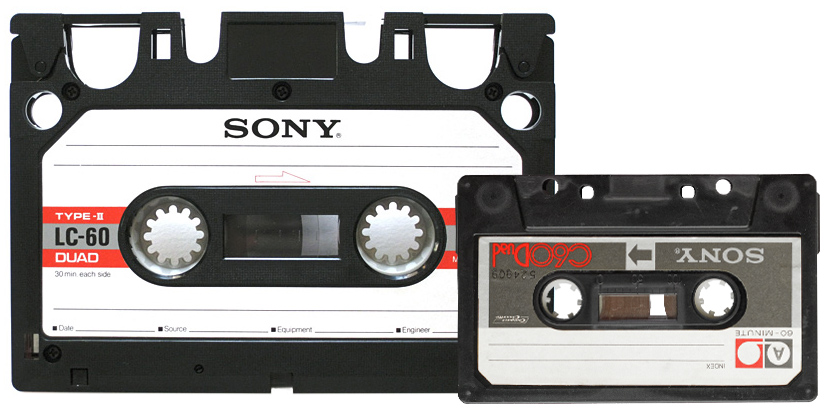
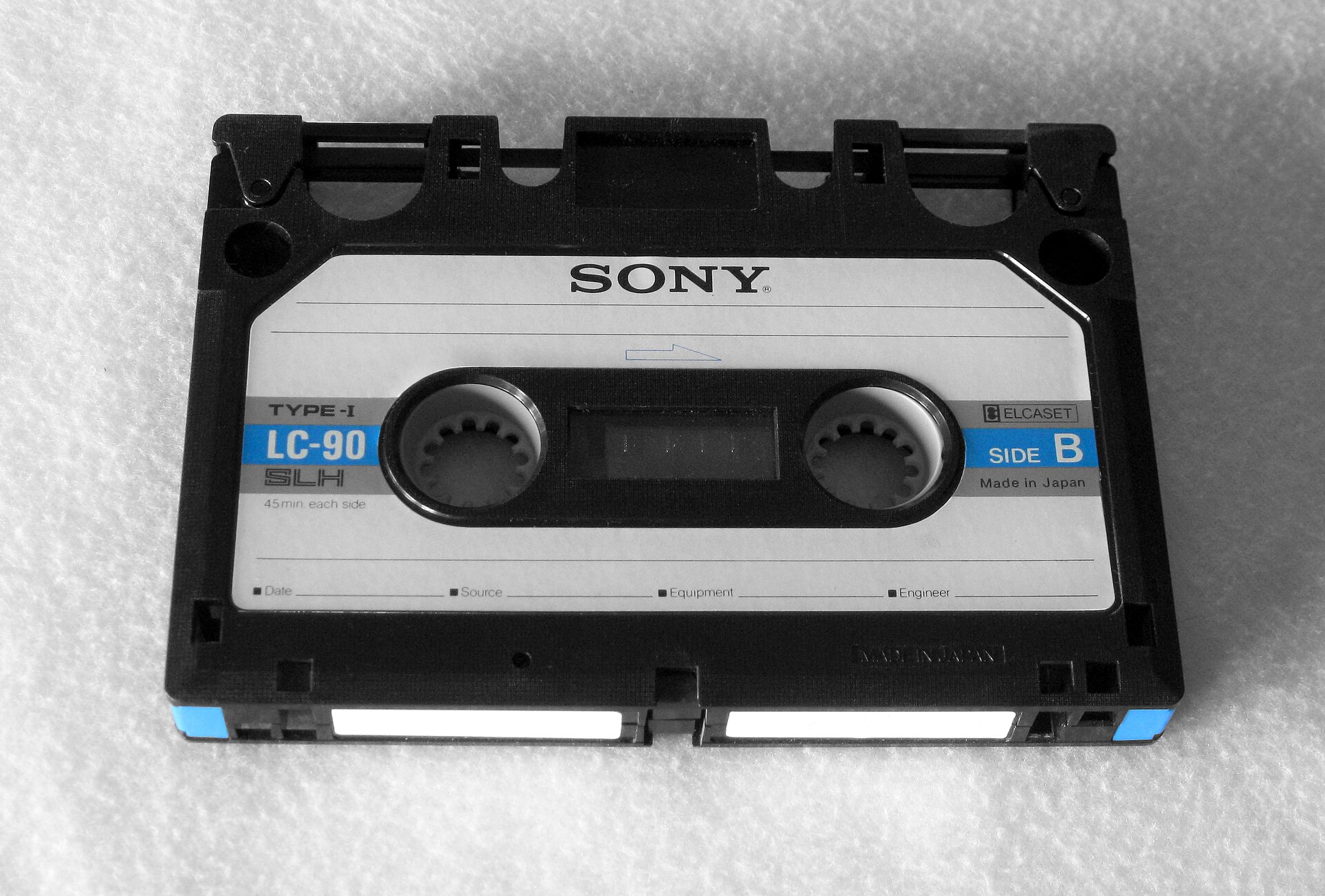
Elcaset was an answer to a narrow question: could a cassette sound as good as open-reel tape? Sony, Panasonic and TEAC jointly developed it in 1976. The shell was about twice the size of a compact cassette and held 1/4 inch tape running at 3.75 inches per second, double the width and double the speed. Sony put the EL-7 on the European market in mid-1976 and brought the line to North America in late 1977. Technics, TEAC, JVC and Hitachi’s Lo-D sold decks too.
The compact cassette did not stand still. Chromium dioxide tape and Dolby B noise reduction closed much of the sound-quality gap on the small format, and Elcaset machines cost far more and offered no portability. By 1980 the format was abandoned. The unsold stock, reportedly about 2,000 decks, went to a Finnish buyer who sold them at clearance prices. Nobody makes Elcaset hardware or tape now, and the format’s brief afterlife is in collectors’ hands.
A format can be better on the bench and still lose, because the cheaper, smaller one was good enough and already everywhere.
Worth remembering
- The tape was 1/4 inch wide and ran at 3.75 inches per second, double the width and speed of a compact cassette, to bring reel-to-reel sound into a cassette shell.
- Sony's top model, the EL-7, sold for about $1,000 in North America.
- Besides Sony, decks were made by Teac (AL-700), Technics (RS-7500U), JVC (LD-777) and Hitachi's Lo-D (D9000).
Gallery
Sources
- Elcaset was jointly developed by Sony, Panasonic and Teac in 1976, using 1/4 inch (6.4 mm) tape at 3.75 inches per second, double the width and speed of a compact cassette. Wikipedia
- The format was abandoned in 1980, when the remaining stock was sold off in Finland; a Finnish company won the auction and sold about 2000 decks there. Wikipedia
- Sony introduced models in mid-1976 (Europe) and late 1977 (North America); the last unsold recorders were auctioned to Finland by 1980; decks were also made by Teac, Technics, JVC and others; North American prices were about $1,000 (EL-7), $700 (EL-5) and $525 (EL-4). reel-reel.com
- Commons category records the format as short-lived, introduced in 1976 and gone by 1980, intended to marry reel-to-reel performance with cassette convenience. Wikimedia Commons
Leave a flower to show you came, and remembered.