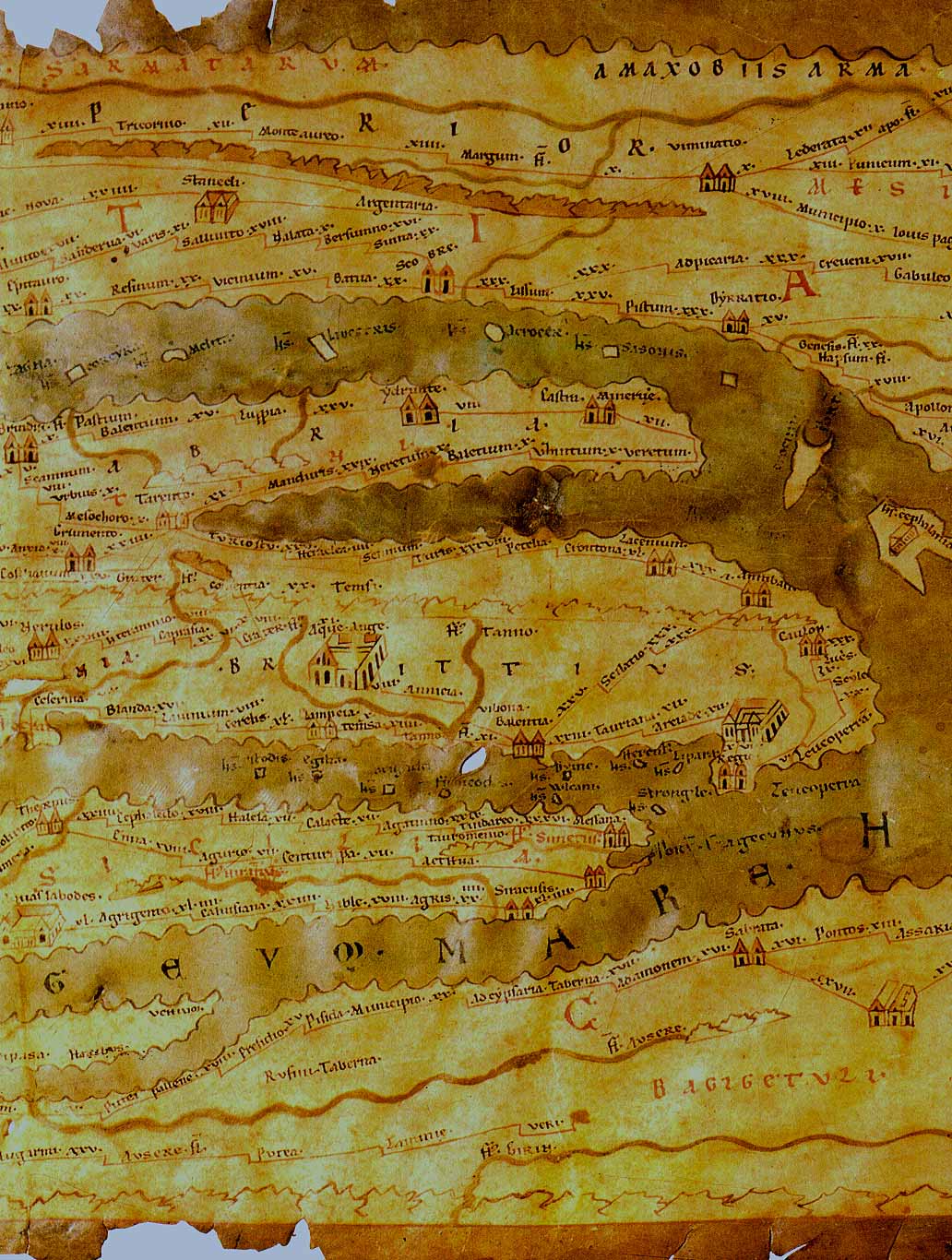
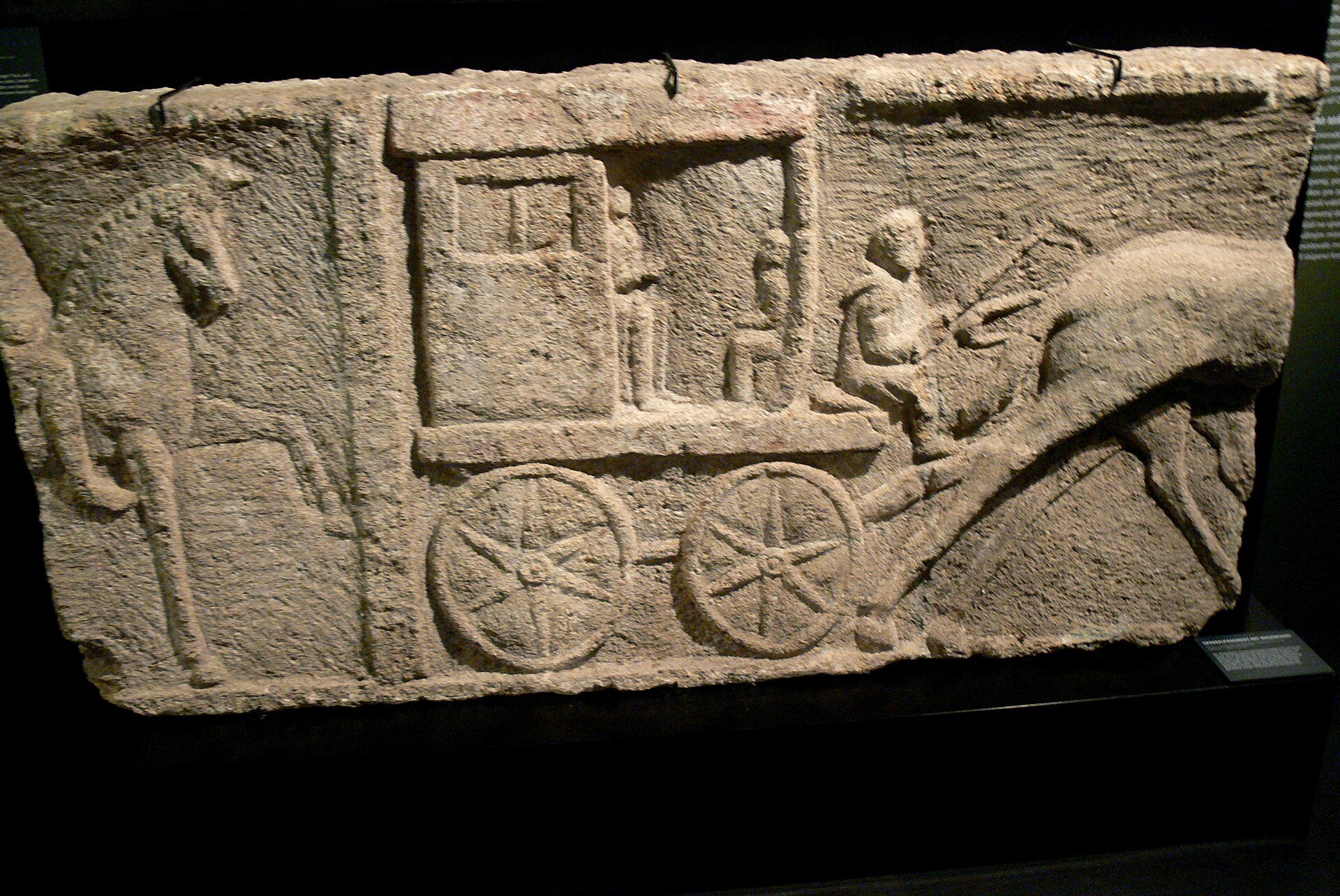
The cursus publicus was the Roman state’s own relay system. Augustus set it up to carry messages, officials and tax revenue between the provinces and Italy, and only holders of an imperial diploma could use it. Stations came in two kinds: mutationes, where horses or mules were changed, and mansiones, which gave lodging. Ramsey puts the mansiones about 25 Roman miles apart with two change stations between each pair. Under Diocletian and Constantine it split into a fast post using horses and mules and a slower one using oxen. Normal travel ran 61 to 100 km a day.
It did not stop in one place. In Ostrogothic Italy it was still running, with the magister officiorum in charge and Gothic saiones doing the courier work. In the East, Procopius charges Justinian in the Secret History with abolishing the Chalcedon-Dakibiza post, cutting the posts elsewhere to one per day’s journey and swapping most horses for a few asses, while keeping the road to Persia as it was. The institution continued as the dromos under the logothetes tou dromou, an office first explicitly attested around 762. Fossella’s 2023 study, as summarised by its reviewer Lucas McMahon, puts its 11th-century peak at 6,400 to 8,000 km of routes and 800 to 1,000 stations; McMahon doubts the 32,000 to 40,000 post horses that Procopius’s figure would imply.
The end is not a dated event. English Wikipedia, citing Bury, says that around 1108, after Alexios I Komnenos’s reforms, the dromos ceased to exist as a department while the logothetes stayed on to handle official communications and foreign residents. Fossella’s book runs to 1204, and McMahon says it never explains how the system worked under the Komnenoi. By the Palaiologan period the logothetes had vanished or become honorary titles. For the Western half of the empire, no source consulted gives an end date.
Worth remembering
- Nobody could use it without an imperial diploma. Forged and stolen diplomas were a standing problem, and governors gave themselves and their families free transport.
- News of Pertinax's accession on 1 January 193 reached Alexandria on 6 March, about 63 days later. A normal day's travel was 61 to 100 km, and a lone emergency rider could cover 160 km or more.
- Procopius gives eight stages as a day's ride, never fewer than five, with forty horses kept at each stage.
Gallery
Further reading
Sources
- Augustus created the service to carry messages, officials and tax revenues between the provinces and Italy; use was limited to holders of an imperial diploma; mutationes were change stations and mansiones offered lodging; the service split into the fast cursus velox (horses, mules) and the cursus clabularis (oxen) under Diocletian and Constantine Wikipedia
- Mansiones about 25 Roman miles apart with two mutationes between them; normal travel 38-62 miles (61-100 km) a day, 160 km or more for a single emergency rider (Ramsey, as cited); news of Pertinax's accession (1 Jan 193) reached Alexandria on 6 March, about 63 days Wikipedia
- Diplomas were forged and stolen, and governors gave free transport to themselves and their families; the service survived in Ostrogothic Italy per Cassiodorus; the dromos continued under the logothetes tou dromou Wikipedia
- Before Justinian a day's journey was divided into eight stages, never fewer than five, with forty horses at each stage; Justinian abolished the Chalcedon-Dakibiza post, kept the old system on the road to Persia, and elsewhere in the East cut the posts to one per day's journey and replaced most horses with a few asses Project Gutenberg (Procopius, Secret History)
- Logothetes tou dromou first explicitly attested c. 762; around 1108 the dromos ceased to exist as a department but the logothetes remained, handling official communications and supervising foreigners in Constantinople Wikipedia
- By the Palaiologan period the various logothetes had vanished or become purely honorary titles Wikipedia
- Review of Fossella (2023): the dromos had 6,400-8,000 km of postal routes and 800-1,000 stations at its 11th-century territorial peak; Procopius's 40 horses per station would mean 32,000-40,000 post horses, a figure the reviewer calls out of proportion; the 12th-century dromos is poorly explained The Byzantine Review (McMahon review of Fossella, Brill 2023)
- In Ostrogothic Italy the magister officiorum oversaw the system of post-horses; the courier agentes in rebus had been largely replaced by Gothic saiones; the Variae include letters ordering an end to abuses of the public post Georgetown University (Cassiodorus, Variae, chapter 3)
- The Tabula Peutingeriana is an itinerarium showing the layout of the cursus publicus and the road network; the surviving parchment copy dates to around 1200 from a Late Antique original; about 6.75 m long and 0.35 m high, with 555 cities and 3,500 other place names Wikipedia
Leave a flower to show you came, and remembered.