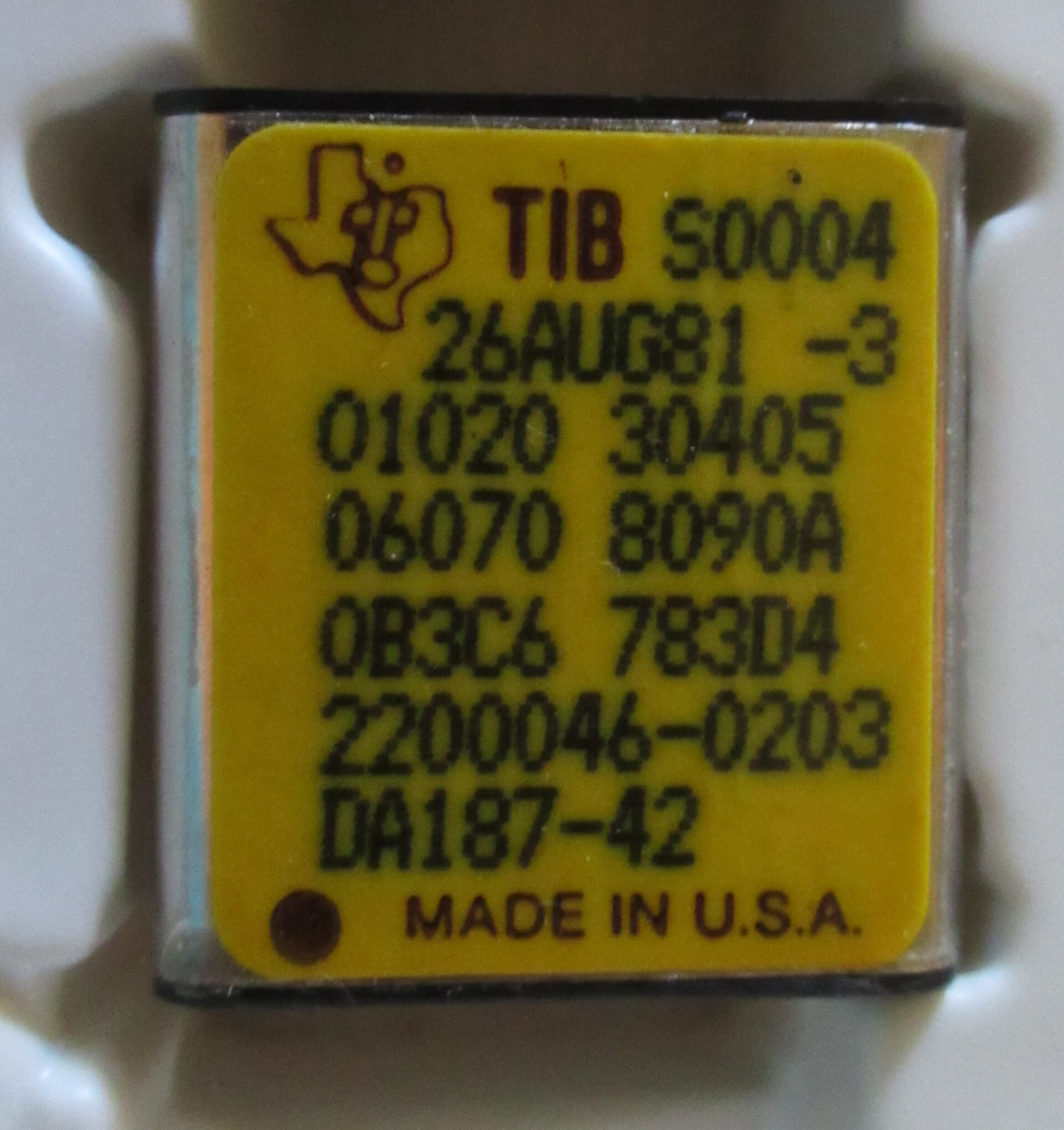
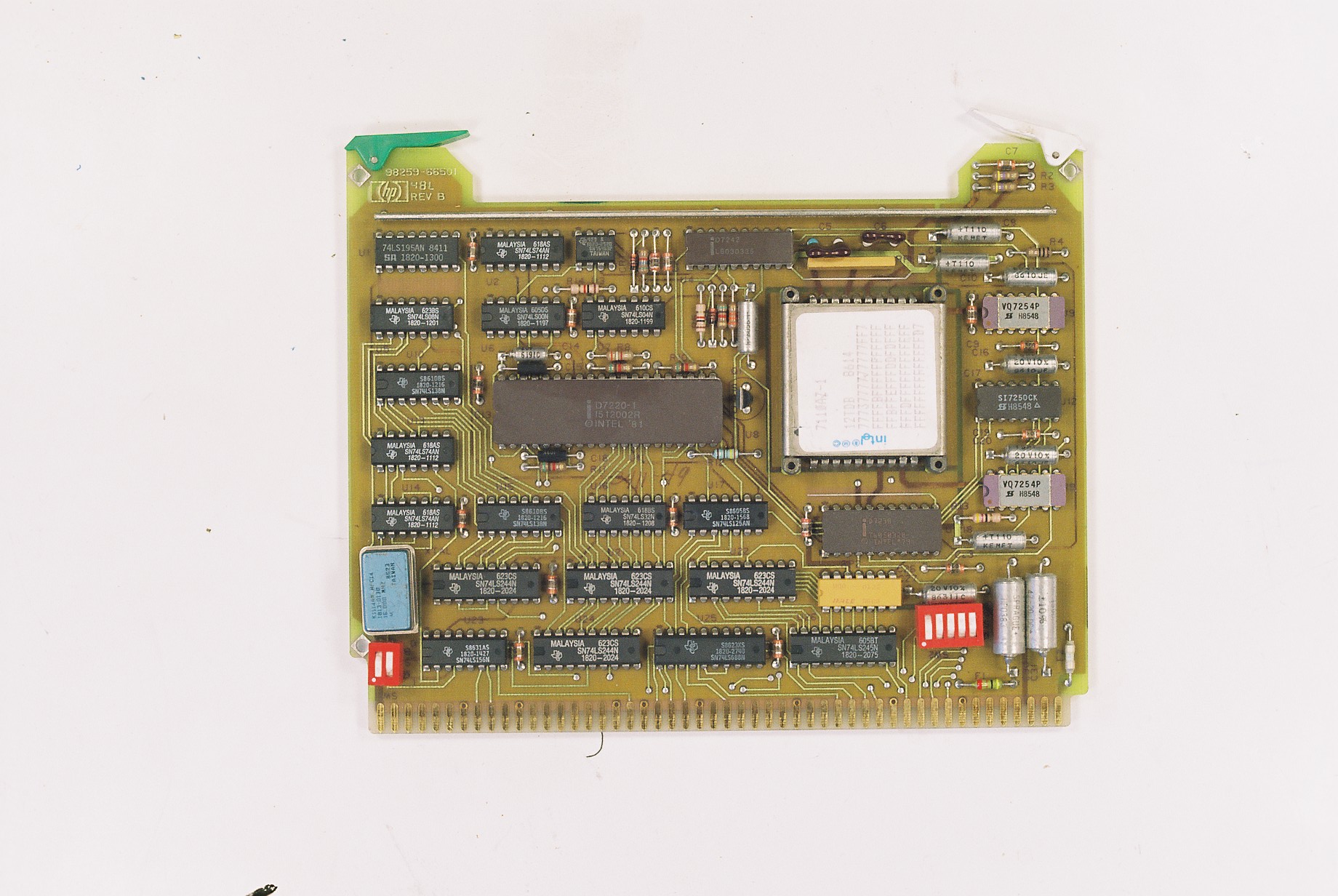
Bubble memory stored bits as tiny magnetised domains, “bubbles”, that circulated through a thin magnetic film under a rotating field. It had no moving parts and kept its contents with the power off. Andrew Bobeck developed it at Bell Labs from the late 1960s, after working on twistor memory. Texas Instruments shipped the first commercial product, the 92-kilobit TIB 0103, in 1977. Intel released a one-megabit chip, the 7110, in 1979 and a four-megabit chip, the 7114, in 1983. Intel’s own history credits bubble memories with surviving shock, dust, humidity, temperature extremes and vibration, and they turned up in the Sharp PC-5000, GRiD laptops, HP instruments and Konami’s Bubble System arcade boards.
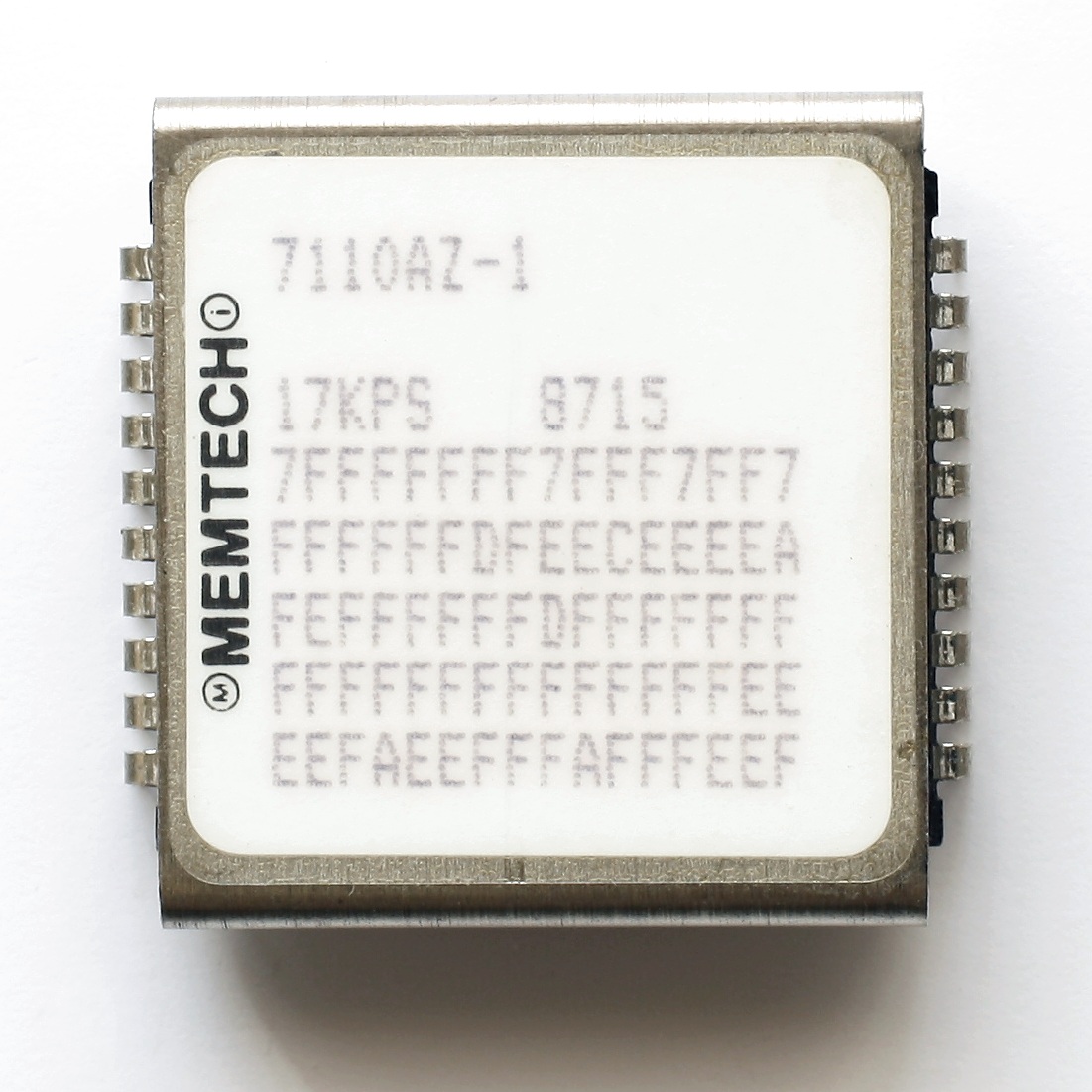
A bubble device needed a complex controller, never got close to DRAM prices, and was sold against hard disks whose cost kept falling. Jerry Pournelle’s verdict was that Intel never made the chips small or cheap enough. Texas Instruments, Rockwell, National Semiconductor and Plessey closed their bubble operations in 1981. Intel kept going until 1986, when it sold Intel Magnetics to MemTech. By the late 1980s MemTech was the only US seller left, supplying military and satellite buyers who would pay for reliability, and commercial interest was gone by about 1990. Flash memory later took the non-volatile, no-moving-parts role bubble memory had aimed at.
Racetrack memory, from Stuart Parkin at IBM, also pushes magnetic domains past a sensor, but it reads them with spintronic sensors and much smaller domains, and it is still an experiment with a 3-bit prototype from 2008. What survives of bubble memory is old stock: hobbyists build boards around salvaged Intel 7110 chips, some sold for under $20.
Worth remembering
- Intel's bubble memory chips were built on transparent garnet wafers, not the silicon wafers of its other products.
- The Konami Bubble System arcade board (1984) loaded games from bubble memory cartridges and needed an 85-second warm-up.
- Bubble memory shipped in the Sharp PC-5000 portable (1983), in GRiD laptops, and in Hewlett-Packard test equipment.
The people
-
Andrew H. Bobeck — Inventor of bubble memory, Bell Labs, 1926–2017
Joined Bell Labs in 1949 and moved from twistor memory to magnetic domains in orthoferrites and garnets; elected to the National Academy of Engineering in 1975.
Gallery
Sources
- Andrew Bobeck is credited as largely responsible for bubble memory; he joined Bell Labs in 1967 to improve twistor memory. Texas Instruments introduced the first commercial bubble memory, the TIB 0103 (92 kilobits), in 1977; Intel released the 1-megabit 7110 in 1979 and 4-megabit parts such as the 7114 in 1983 Wikipedia
- In 1981 Rockwell, National Semiconductor, Texas Instruments and Plessey closed their bubble memory operations; Intel 'never managed to make bubble-memory chips small enough or cheap enough' while 'hard disks just kept getting cheaper' (Jerry Pournelle) Wikipedia
- Intel ran Intel Magnetics for about a decade and divested it in 1986 to concentrate on newer memory technologies; the devices were prized for resistance to shock, dust, humidity, temperature extremes and vibration Intel
- Bubble memory needed a complex controller, never approached DRAM prices, and by the late 1980s only MemTech still sold it in the US, mainly for harsh environments such as military hardware and satellites Dvorak News Blog
- Andrew H. Bobeck (1 October 1926 to 14 December 2017) joined Bell Labs in 1949, developed bubble memory from the late 1960s, was elected to the National Academy of Engineering in 1975 and retired from AT&T Bell Labs in 1989 Wikipedia
- Racetrack memory also moves magnetic domains past read/write elements but relies on spintronic magnetoresistive sensors and much smaller domains; it remains experimental, with a 3-bit prototype shown in 2008 Wikipedia
- Retrocomputing hobbyists build boards from salvaged Intel 7110 chips taken from old equipment, with used and untested chips selling for under $20 Hackaday.io
Leave a flower to show you came, and remembered.