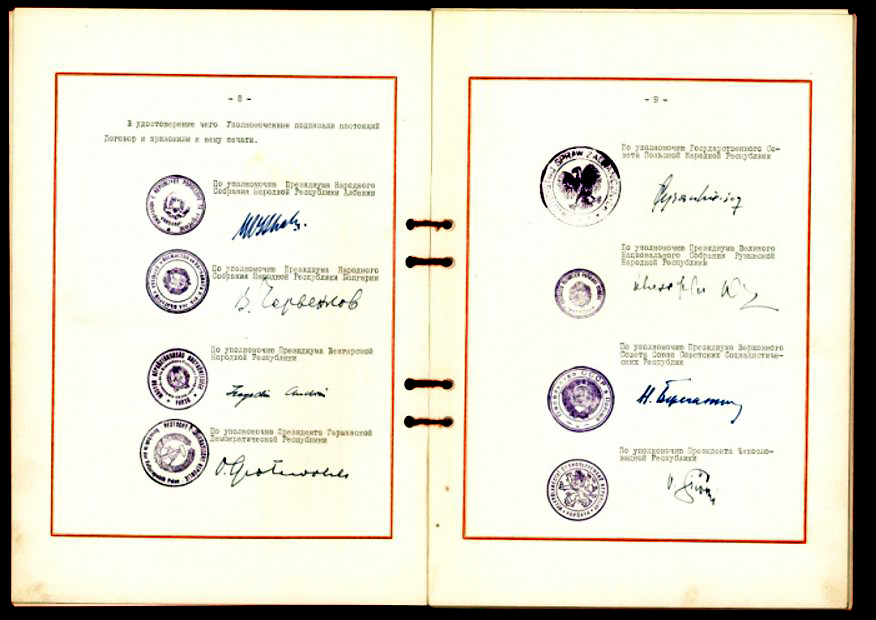
The Warsaw Pact was a treaty alliance of eight states: Albania, Bulgaria, Czechoslovakia, East Germany, Hungary, Poland, Romania and the Soviet Union. It was signed in Warsaw on 14 May 1955, days after West Germany joined NATO. The U.S. State Department’s Office of the Historian describes it as a Soviet counterweight to NATO. The treaty committed each party to assist an attacked member (Article 4) and set up a Joint Command of the armed forces (Article 5) and a Political Consultative Committee (Article 6).
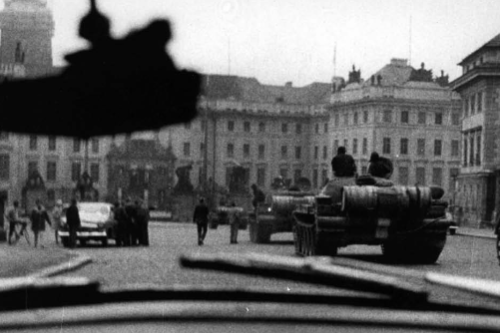
The alliance was never uniform. Albania stopped taking part in 1961 and withdrew formally on 13 September 1968. In November 1956 Soviet forces invaded Hungary after the Nagy government announced it was leaving the alliance. In August 1968 Pact forces entered Czechoslovakia, its only joint military action; Romania and Albania did not take part.
The end came by withdrawal. East Germany left on 24 September 1990 ahead of reunification, and by October 1990 Czechoslovakia, Hungary and Poland had withdrawn from joint exercises. A protocol signed in Budapest on 25 February 1991 repealed the military agreements and disbanded the military structures, and a protocol signed in Prague on 1 July 1991 recorded the expiry of the treaty. Russia and several other post-Soviet states signed the Collective Security Treaty in Tashkent in 1992, which became the CSTO in 2002. It is a separate organisation with a Moscow headquarters; the analyst Dmitry Gorenburg describes it as a new body that “has proved to be no match for the Warsaw Pact”.
Worth remembering
- The treaty was signed on 14 May 1955, days after West Germany entered NATO.
- The alliance's only joint military action was the August 1968 invasion of Czechoslovakia. Romania and Albania did not take part.
- Poland's copy of the treaty stayed in the Ministry of Foreign Affairs archive until 23 September 2020, when it was handed to the Central Archives of Modern Records.
Gallery
Further reading
Sources
- Treaty text: signed in Warsaw on 14 May 1955; mutual assistance (Art. 4); Joint Command (Art. 5); Political Consultative Committee (Art. 6); parties Albania, Bulgaria, Hungary, GDR, Poland, Romania, USSR, Czechoslovakia Yale Law School, Avalon Project
- Established 14 May 1955 as a Soviet counterweight to NATO, days after West Germany joined NATO; East Germany left in September 1990; Czechoslovakia, Hungary and Poland withdrew from Pact exercises by October 1990; officially disbanded in March and July 1991 U.S. Department of State, Office of the Historian
- Budapest protocol of 25 February 1991 disbanding the military structures; Prague protocol of 1 July 1991 on the expiry of the treaty; original treaty handed to the Central Archives of Modern Records on 23 September 2020 Polish Ministry of Foreign Affairs
- Albania's de facto expulsion (1961) and formal withdrawal (13 September 1968); East Germany's withdrawal (24 September 1990); Soviet invasion of Hungary in November 1956; the 1968 invasion of Czechoslovakia as the Pact's only joint military action, without Romania and Albania Wikipedia
- Collective Security Treaty signed 15 May 1992; CSTO established 7 October 2002; headquarters Moscow; described as an attempt at a successor alliance to the Warsaw Pact Wikipedia
- Post-Soviet Russia laid out a new collective defense organization; the CSTO has proved to be no match for the Warsaw Pact PONARS Eurasia (Dmitry Gorenburg)
Leave a flower to show you came, and remembered.